The Power of Less: How Japanese Yohaku Philosophy Is Reshaping the Way Affluent Americans Manage Stress
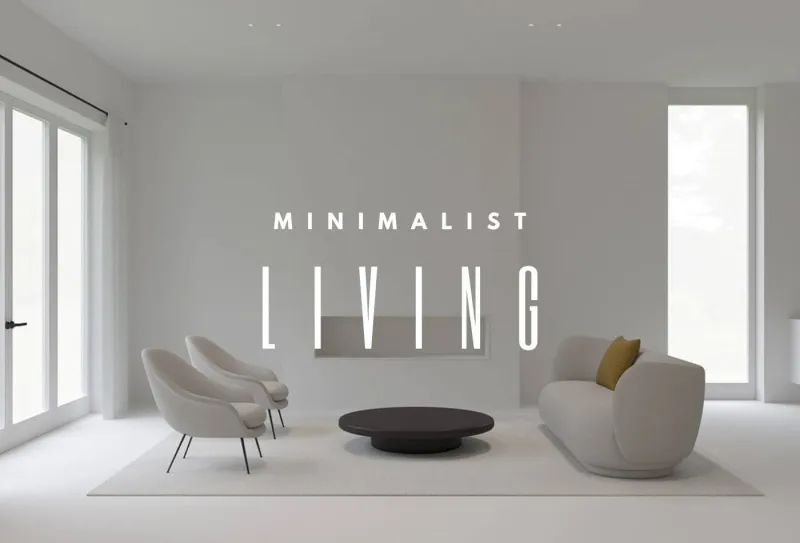
Photo: minimalist Japanese meditation room empty space natural light zen interior, via dropinblog.net
There is a particular kind of silence that settles over a well-considered room—not the silence of neglect, but of intention. It is the silence that Japanese aesthetics have long understood as yohaku no bi: the beauty of empty space, the eloquence of what is left unsaid, the grace of what is deliberately withheld. For centuries, this principle has shaped everything from ink-wash painting to tea ceremony architecture. Today, it is quietly reshaping the wellness routines of a generation of Americans who have grown exhausted by the relentless logic of more.
A Philosophy Born in Negative Space
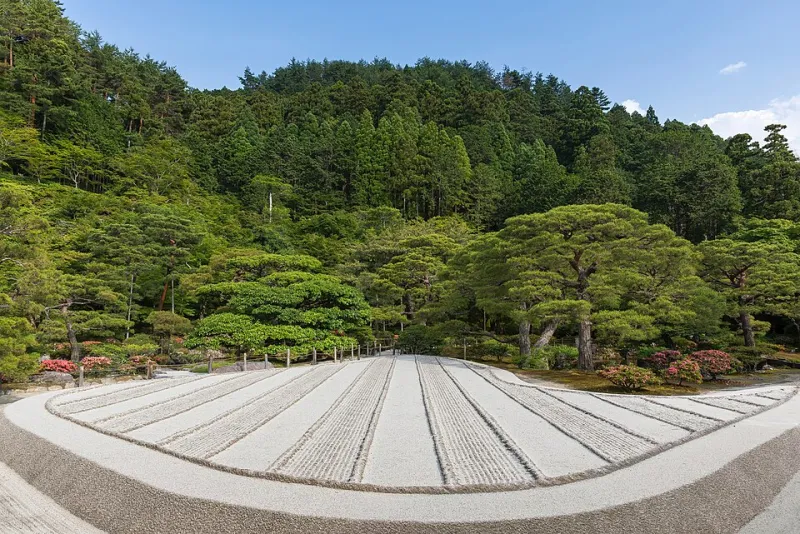
To understand yohaku is to resist the Western instinct to fill. In classical Japanese art, the unpainted portion of a canvas is not absence—it is active presence. It breathes. It allows the painted element to resonate more fully. Applied to daily life, the philosophy suggests that clarity, calm, and even creativity emerge not from addition but from careful, considered removal.
"When I first encountered the concept, I was in the middle of a particularly overwhelming season professionally," says Dr. Lena Hartwell, a San Francisco-based integrative psychiatrist who now incorporates yohaku principles into her practice. "What struck me was that it wasn't asking me to acquire anything new—no supplement, no retreat, no productivity system. It was asking me to look at what I could release. That felt radical."
Hartwell has since developed what she describes as a "subtraction audit" for her clients—a structured process of identifying the commitments, objects, digital inputs, and social obligations that generate friction without meaning. The methodology draws directly from Japanese principles of negative space, applied to the architecture of a life rather than the surface of a canvas.
Digital Silence as a Design Choice
Perhaps nowhere is the yohaku impulse more visible than in the growing movement toward intentional digital minimalism among America's professional class. The smartphone, once a symbol of connectivity and status, is increasingly being treated as a design problem—something to be edited rather than expanded.
In New York and Los Angeles, a number of high-end wellness studios now offer what they term "digital sabbaticals"—structured, multi-day experiences in which participants surrender their devices and engage instead with analog practices drawn from Japanese tradition: calligraphy, tea preparation, contemplative walking, and extended periods of unstructured quiet.
"Our clients are not people who lack stimulation," notes Marcus Okafor, co-founder of Interval, a members-only wellness studio in Manhattan that has adopted a distinctly Japanese spatial sensibility. "They are people who have too much of it. What they are genuinely hungry for is the experience of a mind that isn't being pulled in seventeen directions simultaneously. Yohaku gives us a framework for designing that experience."
Interval's interiors reflect this commitment with striking clarity. Walls are left largely bare. Natural materials—pale ash wood, unglazed ceramic, undyed linen—are chosen for their quietness. Even the lighting is calibrated to avoid the aggressive brightness that characterizes most American wellness spaces. The effect is one of profound deceleration.
The Capsule Wardrobe as Spiritual Practice
Beyond the meditation studio, yohaku has found an unlikely home in the American closet. The capsule wardrobe movement—long associated with European minimalism—is being reframed through a Japanese lens by a new generation of style-conscious Americans who see their clothing choices as extensions of a broader philosophical commitment.
"I used to shop as a form of stress relief," admits Claire Yuen, a Chicago-based architect and longtime reader of Japanese design literature. "I had a closet full of things I didn't wear and a persistent low-grade anxiety I couldn't name. Reducing my wardrobe to thirty pieces—each chosen with genuine care—was genuinely transformative. Not because of the clothes themselves, but because of what the practice revealed about how I was using consumption as a coping mechanism."
Yuen's approach mirrors the Japanese concept of danshari—the art of refusing, disposing, and separating from unnecessary objects—which gained widespread attention in the West through the decluttering movement but carries a more explicitly philosophical weight in its original cultural context. Where Western minimalism often emphasizes aesthetics, danshari is fundamentally about the relationship between the individual and their possessions: who is in control, and what is truly serving whom.
Designing Space for the Unscheduled Mind
For those with the means to do so, the yohaku impulse is also transforming the physical design of American homes. Interior designers working with wellness-oriented clients report a marked increase in requests for what one Los Angeles designer describes as "rooms with no purpose"—spaces deliberately left unassigned, free from the productivity logic that governs the rest of the house.
"There is a growing recognition that the mind needs unstructured space just as much as the body needs sleep," says Tomoko Ishida, a Japanese-American interior designer based in Marin County whose practice focuses on creating contemplative residential environments. "A room that has no agenda—no television, no desk, no defined function—is an extraordinarily rare and valuable thing in an American home. My clients who have created such spaces consistently describe them as the most important rooms in the house."
Ishida draws directly from the Japanese tradition of the tokonoma—the alcove found in traditional rooms, typically containing a single scroll or seasonal object—as a model for restraint in interior composition. "The tokonoma teaches us that one beautiful thing, given sufficient space, is more powerful than ten," she explains. "That principle scales. It applies to rooms. It applies to schedules. It applies to relationships."
The Discipline of Deliberate Living
What unites these varied expressions—the digital detox, the edited wardrobe, the purposeless room—is a shared understanding that restraint is not deprivation but discipline. It is the discipline of the ink-wash artist who knows that the unpainted space is as meaningful as the stroke. It is the discipline of the tea master who understands that a single bowl, properly attended to, contains more beauty than an entire cabinet of fine china.
For Americans navigating the particular anxieties of contemporary professional life, this represents a genuinely countercultural proposition. In a culture that has long equated abundance with success and busyness with virtue, the suggestion that less might constitute a form of luxury—perhaps the most refined form of luxury—carries a quiet but unmistakable force.
"Yohaku asks a question that most of us have never seriously considered," says Dr. Hartwell. "What would remain if you removed everything that wasn't essential? For most of my clients, the answer turns out to be more than enough."
In that question, and in the spacious, unhurried life it invites, the ancient Japanese art of beautiful emptiness finds its most contemporary expression yet.