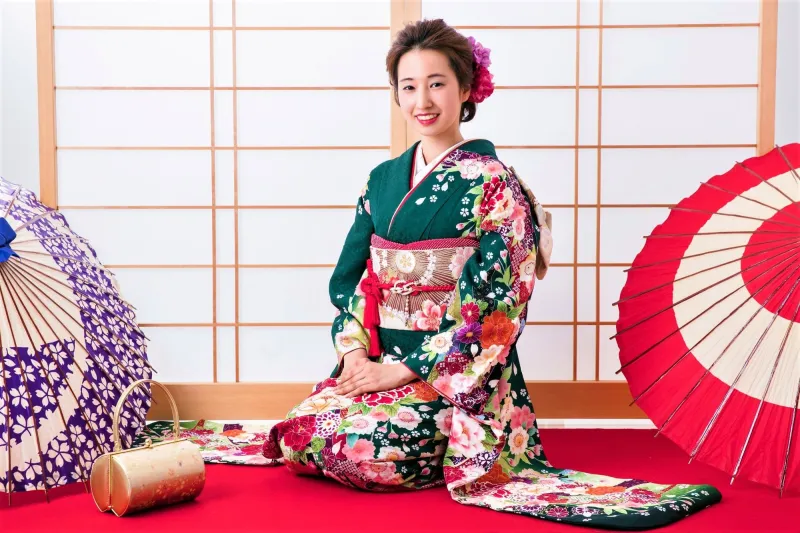
Eating by the Calendar: How the Japanese Principle of Shun Is Reshaping the American Table
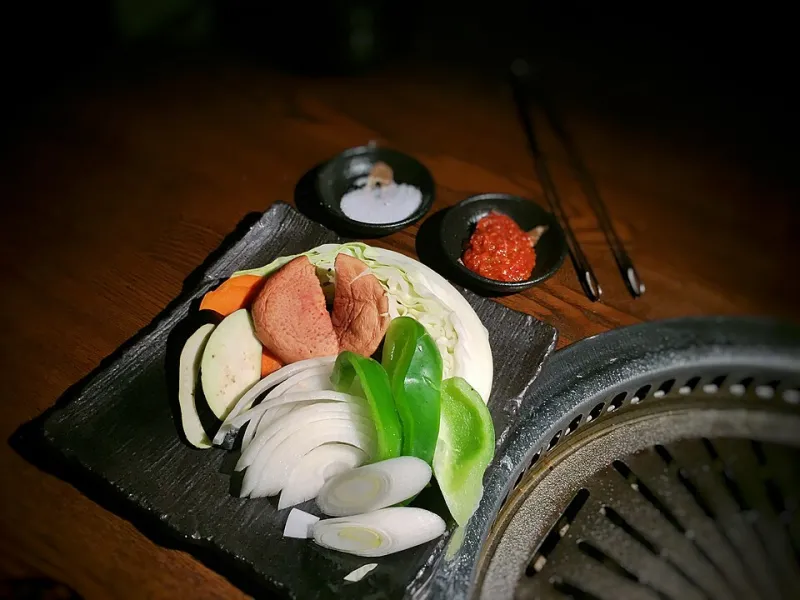
Photo: T.Tseng, CC BY 2.0, via Wikimedia Commons
There is a particular kind of abundance that has come to define the American grocery store. Strawberries in December. Tomatoes in February. Asparagus on the shelf regardless of whether it is April or October. For decades, this year-round availability was celebrated as a triumph of modern agriculture and global supply chains. Yet something has quietly shifted among a certain class of American cook—one who has begun to regard the perpetual supermarket not as a luxury, but as a loss.
The concept driving this shift has a Japanese name: shun (旬). Loosely translated, it refers to the precise moment when an ingredient reaches its absolute peak—when the flavor is fullest, the texture most alive, and the nutritional value at its height. In Japanese culinary culture, to eat shun is not merely a dietary choice. It is an act of attentiveness, a way of acknowledging that time and place are themselves ingredients.
The Discipline of the Right Moment
Japanese cuisine has long organized itself around this principle. The kaiseki tradition—Japan's most refined multi-course format—is essentially a meditation on shun, with each dish constructed to reflect not just what is available, but what is right at this precise point in the year. A chef in Kyoto might serve bamboo shoots in early spring, ayu sweetfish in summer, and matsutake mushrooms in autumn, not because other ingredients are unavailable, but because serving anything else would represent a kind of culinary dishonesty.
This philosophy stands in deliberate contrast to the logic of global supply chains, which prize consistency over character. And it is precisely that contrast that is drawing American cooks toward it.
"When I first started cooking seriously, I thought having access to everything year-round made me a better cook," says a private chef based in Napa Valley who restructures her client menus around strict seasonal windows. "What I've learned is that it actually made me lazy. When you only have six weeks with a particular ingredient, you become obsessed with it. You understand it completely."
Restraint as a Form of Sophistication
For affluent American households accustomed to choosing from an essentially limitless pantry, the deliberate narrowing of options that shun demands can feel counterintuitive. Yet this is precisely where the philosophy reveals its deeper logic. Scarcity, in the shun framework, is not a deprivation—it is a form of editorial curation. The season decides the menu, and the cook's role becomes one of deep attention rather than endless selection.
High-end grocers in cities like San Francisco, New York, and Chicago have begun to reflect this sensibility. Several specialty markets have started labeling produce with harvest windows and peak-flavor dates rather than simple country-of-origin stickers. Some have gone further, quietly discontinuing out-of-season items that were previously stocked as a matter of course.
"Our customers don't want the tomato that traveled 4,000 miles in January," notes a buyer for a premium independent grocer in the Pacific Northwest. "They want the tomato that was picked yesterday, in August, twelve miles away. They are willing to wait for it. That willingness to wait is itself a kind of discernment."
The Nutritional Argument
Beyond philosophy, the shun approach carries a practical dimension that nutritionists are beginning to articulate more clearly. Produce harvested at peak ripeness and consumed close to its source retains measurably higher concentrations of vitamins, antioxidants, and phytonutrients compared to the same ingredient picked early to survive long-distance transport. The flavor difference that cooks describe is not merely subjective—it is biochemical.
A registered dietitian who works with high-performance clients in the Los Angeles area frames the conversation this way: "We spend a great deal of time and money optimizing what we eat. But the timing of what we eat—the seasonality of it—is often entirely ignored. The Japanese have understood for a very long time that when you eat something matters almost as much as what you eat."
Rebuilding the American Seasonal Calendar
Adopting shun in an American context requires a certain reorientation. Japan's four seasons map onto a refined agricultural calendar that has been codified over centuries. The United States, with its vast geography and regional climates, presents a more complex picture—but also a richer one. Ramps in Appalachian spring. Dungeness crab on the Pacific Coast in winter. Vidalia onions in Georgia in May. Hatch chiles in New Mexico in late summer. Each region carries its own shun calendar, waiting to be read.
Chefs who have embraced this framework describe a process of becoming students of their local landscape. They develop relationships with farmers, track weather patterns, and plan menus months in advance—not to control the outcome, but to be ready for it.
"The season doesn't ask permission," observes a chef-owner whose New England restaurant operates on a menu that changes not weekly but daily, depending entirely on what arrives from nearby farms and fisheries. "You learn to think less like a chef and more like a farmer. The land is running the kitchen."
A New Kind of Anticipation
Perhaps the most unexpected gift of the shun philosophy is the emotion it restores to eating: anticipation. When Rainier cherries are available for three weeks in late June, those three weeks carry a particular quality of attention. The first bite is weighted with the knowledge of the eleven and a half months that preceded it. The last bite carries the awareness that another year must pass before this exact flavor returns.
This is the paradox at the heart of shun: by accepting limitation, one arrives at intensity. The Japanese have a word for this quality of transient beauty—mono no aware, the bittersweet awareness of impermanence. Applied to the table, it transforms a simple meal into something closer to an experience of time itself.
For the American cook who has grown weary of infinite choice, this is not a sacrifice. It is a homecoming.