The Beauty of Wearing Out: How Wabi-Sabi Became the Most Coveted Aesthetic in American Interiors

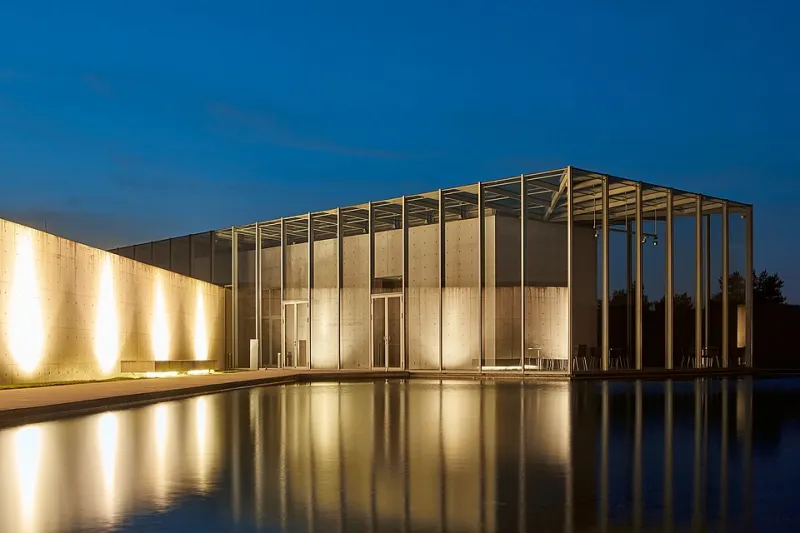
Photo: Light Through Glass, CC BY-SA 4.0, via Wikimedia Commons
Consider the bowl. It sits on a kitchen shelf in a townhouse in Brooklyn's Cobble Hill neighborhood, and it is, by any conventional measure, imperfect. Its rim is uneven. Its glaze pools and breaks unevenly across the clay body. A hairline crack runs from the lip toward the base, filled with a thin line of gold lacquer—the Japanese repair technique known as kintsugi. Its owner, a creative director at a prominent fashion house, paid more for this single object than she has for most things in her home.
"People ask me why I would spend that kind of money on something broken," she says. "I tell them it's not broken. It's finished."
This is the sensibility that wabi-sabi (侘び寂び) cultivates—and it is spreading through the upper registers of American design culture with a quiet but unmistakable momentum. Once a concept understood primarily by Japan scholars and mid-century modernists, wabi-sabi has become the organizing philosophy behind some of the most deliberate and expensive interiors, wardrobes, and object collections in the country.
The Philosophy in Brief
Wabi-sabi resists precise translation, which is perhaps part of its appeal. At its core, the concept encompasses two related ideas: wabi, associated with simplicity, rusticity, and the austere beauty found in natural forms; and sabi, which speaks to the beauty that emerges through the passage of time—the patina of age, the evidence of use, the dignity of impermanence.
Together, they describe an aesthetic worldview that finds beauty not in the pristine or the permanent, but in the transient, the asymmetrical, and the incomplete. A moss-covered stone. A tea bowl with an intentional irregularity. A linen textile that becomes more beautiful with every washing. The philosophy is deeply rooted in Zen Buddhism and has shaped Japanese art, architecture, and craft for centuries.
In contemporary America, it arrives as a corrective.
The Exhaustion of Perfection
For the past decade, a particular vision of domestic beauty dominated the cultural conversation: the white kitchen with seamless cabinetry, the Instagram-ready shelf arrangement, the interior that looked as though no one had ever actually lived in it. This aesthetic was not without its pleasures, but it carried a particular kind of pressure—a demand for surfaces without history, spaces without evidence of time.
The reaction, among a certain segment of design-conscious Americans, has been decisive. Linen is left to wrinkle. Wooden furniture is chosen for its knots and grain variations rather than despite them. Ceramics are sought specifically because the maker's hand is visible in the finished piece. The goal is no longer the elimination of imperfection, but its cultivation.
"There's a kind of exhaustion with the flawless," observes a Los Angeles-based interior designer whose commissions have shifted markedly toward what she describes as "textured restraint." "My clients have had the perfect house. Now they want the house that feels like it has a soul."
What Collectors Are Actually Buying
The market for wabi-sabi-inflected objects has matured considerably. American collectors are now making serious financial commitments to hand-thrown ceramics from Japanese artisans, to antique textiles with visible mending, to furniture made from reclaimed wood that bears the marks of its previous life. Auction houses have noted sustained demand for Japanese folk objects—mingei—that would once have been considered too humble for serious collection.
Luxury retailers have taken notice. Several high-end home goods brands have introduced lines that deliberately incorporate variation and irregularity, with no two pieces identical. The marketing language around these collections is careful but consistent: words like "handcrafted," "singular," and "time-worn" do considerable work.
There is an obvious tension here that deserves acknowledgment. Wabi-sabi, as a philosophy, is not easily reconciled with premium pricing and aspirational branding. Authenticity purchased at significant expense occupies complicated philosophical territory. Yet the tension itself may be part of what makes the aesthetic so generative for this particular cultural moment—it asks its adherents to think carefully about what they are actually valuing, and why.
The Anti-Status Symbol That Became a Status Symbol
Among tastemakers who have oriented their homes and wardrobes around wabi-sabi principles, there is a shared understanding that the aesthetic operates as a kind of signal—one that communicates a particular level of cultural literacy. To choose the irregular over the perfect, the aged over the new, the handmade over the machine-finished, is to demonstrate that one has moved beyond the first stage of acquisition into something more considered.
A collector in Chicago who has spent years assembling a home around Japanese antiques and contemporary craft puts it plainly: "The people who understand what they're looking at don't need it explained. That's the point."
This is, of course, its own form of status. The wabi-sabi interior announces its owner's sophistication precisely through its apparent indifference to announcement. It is the quiet room that rewards close attention—a different proposition from the statement room designed to impress at a glance, but no less intentional.
Living with Impermanence
What distinguishes genuine engagement with wabi-sabi from mere aesthetic trend-following is the philosophical commitment it asks of the people who practice it. The philosophy does not simply prefer old things to new ones, or rough surfaces to smooth ones. It asks its adherents to develop a different relationship with time itself—to find comfort in the fact that objects change, that beauty is not fixed, that the crack in the glaze is not a failure but a record.
For Americans accustomed to replacing rather than repairing, to upgrading rather than appreciating, this represents a genuine shift in orientation. It is, in the end, less about how a home looks than about how one chooses to inhabit time.
The bowl with the golden crack sits on its shelf. It holds the light differently every hour of the day. It will look different still in ten years. That, its owner would tell you, is precisely what she paid for.