The Considered Closet: How Japanese Fashion Wisdom Is Redefining What It Means to Dress Well in America
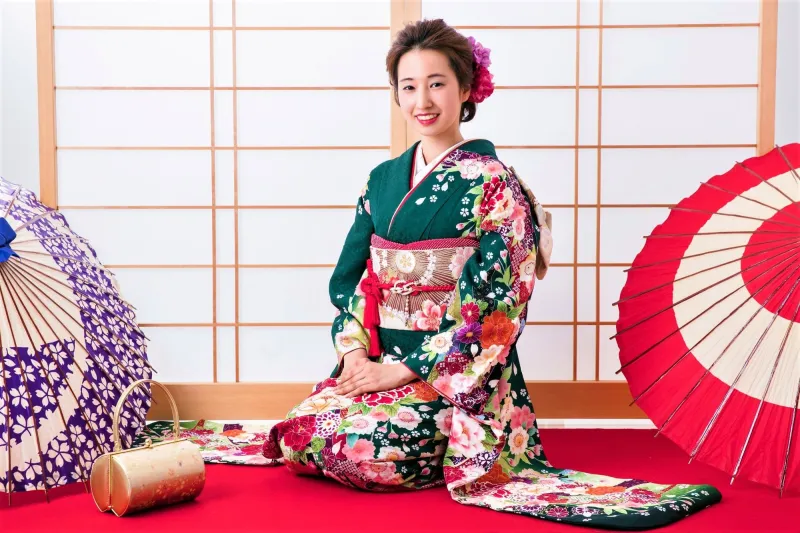
Photo: Japanese minimalist fashion quality wardrobe neutral tones Tokyo style luxury clothing, via thestrongtraveller.com
Open the wardrobe of a certain kind of Tokyo resident — a graphic designer in Daikanyama, perhaps, or a senior editor at one of the city's long-running style publications — and you will not find abundance. You will find perhaps thirty or forty pieces, each selected with the kind of care that most people reserve for major purchases. You will find a jacket that has been worn two hundred times and looks better for it. You will find the same white shirt in two different weights of cotton. You will find almost nothing that was bought on impulse, on sale, or for a single occasion.
This is not deprivation. This is kodawari — a Japanese term that describes an uncompromising, almost obsessive commitment to quality and craft in one's chosen domain. And it is this sensibility, rather than any particular silhouette or trend, that is quietly transforming how a generation of affluent American consumers thinks about getting dressed.
The Problem With the American Wardrobe
The average American purchases approximately sixty-five new garments per year. The average Japanese consumer purchases roughly forty. The gap is not merely numerical — it reflects a fundamentally different relationship with clothing as an object, an investment, and a form of self-expression.
"American fashion culture has been shaped by access," observes Yuki Hashimoto, a Tokyo-born stylist now based in Brooklyn who works with a clientele that includes musicians, architects, and finance professionals. "Access to fast fashion, access to luxury at every price point through resale, access to trends the moment they appear online. But access is not the same as taste. And more and more of my clients are realizing they have a lot of access and very little taste — by which I mean, very little sense of their own aesthetic identity."
Hashimoto's solution is not a capsule wardrobe in the conventional sense — the ten-piece travel-ready formula beloved of productivity bloggers. It is something more demanding and more personal: a wardrobe built around deep knowledge of one's own body, lifestyle, and values, populated by pieces chosen to last decades rather than seasons.
The Investment Piece Reimagined
In American fashion discourse, the term "investment piece" has been so thoroughly co-opted by marketing copy that it has nearly lost its meaning. A handbag that retains resale value is not, strictly speaking, an investment in the Japanese sense. An investment piece, as understood through the lens of Japanese fashion philosophy, is an item whose value to you increases with time — through wear, through memory, through the way it gradually conforms to your particular body and life.
This is the animating principle behind the growing American appetite for Japanese heritage brands — labels that have spent decades, sometimes generations, perfecting a single category of garment.
Consider Kapital, the Okayama-based denim and workwear label that has developed a devoted following among American collectors and stylists. A pair of Kapital jeans — priced between $350 and $600 depending on the weave and treatment — is not purchased for its logo or its trend relevance. It is purchased because the brand's proprietor, Toshikiyo Hirata, has spent thirty years studying American workwear traditions with a reverence that most American manufacturers abandoned in the 1970s. The resulting garment fades, wears, and ages in ways that cheaper alternatives cannot replicate. It becomes, over time, a record of the life lived in it.
Similarly, Orslow, a Tokyo label founded by designer Ichiro Nakatomi, has found a dedicated American audience through stockists like Unionmade in San Francisco and The Bureau Belfast, with pieces retailing between $200 and $500. The brand's proposition is almost aggressively simple: classic silhouettes, Japanese-milled fabrics, no seasonal gimmicks. "We make clothes for people who do not want to think about fashion," Nakatomi has said — a statement that sounds paradoxical until you understand that it describes the most sophisticated possible relationship with clothing.
Tokyo Street Style as a Blueprint — Not a Costume
It would be a mistake to interpret the Japanese influence on American wardrobes as a call to dress like a Tokyo resident. Hashimoto is emphatic on this point. "Style is not transferable. What you can transfer is approach."
The approach, distilled to its essentials, involves several principles that translate cleanly across cultural contexts:
Proportion over silhouette. Tokyo's most admired dressers are not slaves to any particular silhouette — they are masters of proportion. The relationship between a garment's volume and the body beneath it is considered more carefully than any trend directive. This is a skill, and like most skills, it improves with practice and patience.
Fabric literacy. Japanese consumers, as a general rule, know more about what their clothes are made of than their American counterparts. They can distinguish between a 120-count cotton and a 160-count. They understand why a linen-silk blend behaves differently in summer than a straight linen. Developing this literacy — which is largely a matter of reading and handling — fundamentally changes the way one shops.
The value of the repeat. Perhaps the most countercultural Japanese fashion principle for American audiences is the practice of wearing the same piece repeatedly, visibly, and without apology. In a social media culture that rewards novelty, choosing to be seen in the same coat every winter for five years is quietly radical. It is also, from a sustainability standpoint, one of the most meaningful choices a fashion consumer can make.
Where to Begin: A Considered Shopping Guide
For American consumers ready to reorient their wardrobes around quality and longevity, the following entry points offer a range of price points and aesthetics:
- Evan Kinori (San Francisco): Slow-made, unstructured garments with a strong Japanese craft influence. Shirts from $350, trousers from $450.
- Kapital (available at Selfridges US, various online stockists): Heritage denim and knitwear with extraordinary aging properties. Denim from $350.
- Comoli (available through select US importers and Grailed): Tokyo's most quietly influential label for refined everyday separates. Shirts from $400.
- Nanamica (New York flagship on Bleecker Street): Technical fabrics applied to classic silhouettes. Outerwear from $600.
- 45R (available online and through select US boutiques): Japanese denim and cotton goods made with extraordinary attention to dyeing and weaving traditions. Pieces from $200.
None of these brands advertise aggressively. None of them release weekly drops. All of them make things that, if properly cared for, will outlast every fast-fashion alternative you have ever owned.
Dressing as a Long Game
The Japanese fashion philosophy that is reshaping American closets is not, at its core, about aesthetics. It is about time — specifically, about the willingness to take a long view of one's relationship with clothing. To buy less, but better. To choose slowly and wear gratefully. To treat a well-made garment not as a consumer product with a built-in expiration date, but as a companion in the ongoing project of living well.
In that sense, it is not so different from ma. It is about creating space — in your closet, in your budget, in your attention — for the things that genuinely deserve to be there.