Silence as Sanctuary: How Japanese Acoustic Philosophy Is Redefining Luxury Living in America
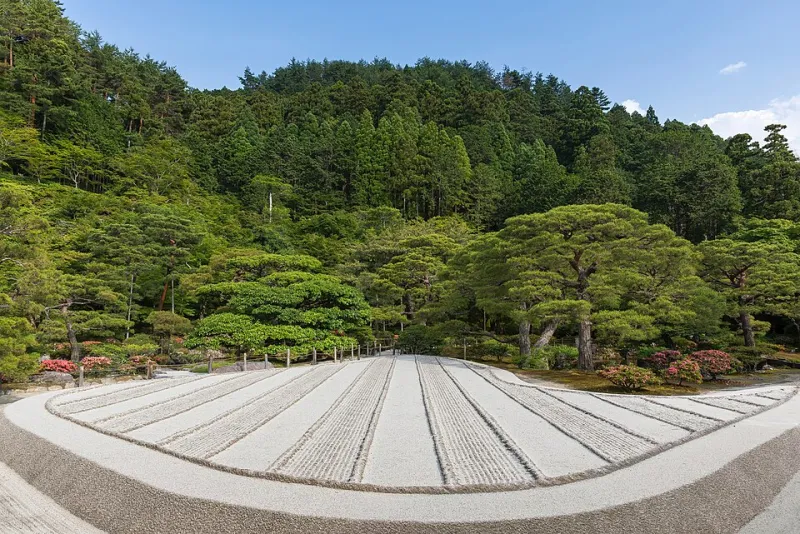
Photo: Basile Morin, CC BY-SA 4.0, via Wikimedia Commons
There is a particular quality of quiet that one encounters in a Kyoto rock garden at dawn. It is not the absence of sound so much as its careful orchestration—water moving over stone, wind disturbing a single branch, the distant toll of a temple bell arriving precisely when the ear has grown accustomed to stillness. For centuries, Japanese architects, monks, and garden designers have understood something that Western design culture is only now beginning to articulate: that sound is not merely background, but structure.
This understanding is reshaping the most thoughtfully designed homes in America.
The Noise Problem No One Is Talking About
Americans have grown accustomed to treating acoustic comfort as an afterthought—something addressed, if at all, by a white noise machine placed discreetly on a nightstand. Yet as remote work has collapsed the boundary between professional and domestic life, and as smart devices have filled every room with ambient chatter, a quiet backlash is taking form. High-net-worth clients are arriving at interior designers and architects with a request that would have seemed unusual a decade ago: they want their homes to feel like somewhere they can actually hear themselves think.
"The conversation used to be almost entirely visual," says one Los Angeles–based interior architect who counts several tech executives among her clientele. "Now, within the first twenty minutes, someone will say, 'I need to be able to sit in this room and feel nothing pressing in on me.' That is fundamentally an acoustic request, even if they don't use that language."
The Japanese tradition offers a remarkably coherent framework for answering it.
Ma and the Meaning of Sonic Space
Central to Japanese aesthetic philosophy is the concept of ma—a term that resists easy translation but encompasses the meaningful interval between things. In architecture, ma governs the relationship between open and enclosed space. In music, it describes the charged pause between notes. In acoustic design, it manifests as the deliberate management of sound's presence and absence.
Traditional Japanese structures were engineered with sonic intentionality long before the vocabulary of acoustic science existed. The engawa, a narrow veranda that wraps the perimeter of a classical home, functions as a transitional zone that absorbs and diffuses exterior sound before it enters the interior. Shoji screens, constructed from washi paper stretched over a lattice of cedar, scatter and soften sound rather than reflecting it. Even the placement of water features in a tea garden—the tsukubai, or stone basin, positioned near the entrance—was understood to provide a sonic threshold, a cue to the visitor that a different quality of attention was now required.
American designers are translating these principles into contemporary terms with striking results.
Building the Sonic Sanctuary
In New York, a boutique architecture firm recently completed a penthouse renovation in which the entire acoustic environment was designed in consultation with a sound ecologist—a discipline that examines the relationship between human well-being and the sonic character of a given space. Walls were finished with a Japanese-influenced layering of natural materials: compressed cork panels beneath hand-applied clay plaster, topped with a final coat of shikkui, the traditional Japanese lime finish long prized for its light-diffusing and moisture-regulating properties. The result absorbs mid-range frequencies with exceptional efficiency while preserving the warmth that hard surfaces tend to strip from a room.
In the Pacific Northwest, where Japanese aesthetic influence has long been woven into regional architecture, a residential designer has built a practice around what she calls "listening rooms"—dedicated spaces engineered for acoustic intimacy. These are not home theaters or audiophile listening dens in the conventional sense, but rooms designed for the experience of silence itself, or of very quiet sound. Ceilings are lined with panels of kiln-dried cedar, chosen as much for its resonant properties as its appearance. Floors are finished in tatami or tatami-adjacent materials that absorb footfall entirely. One client, a prominent venture capitalist, described his listening room as "the only place in my life where I genuinely cannot hear what is happening somewhere else."
The Market for Curated Quiet
The commercial appetite for sonic luxury extends well beyond custom residential projects. Premium soundproofing has become one of the fastest-growing subcategories in the high-end building materials market. Companies specializing in acoustic panels have begun marketing directly to design-conscious consumers rather than exclusively to commercial clients, offering products that function as wall art as much as sound management—hand-woven textile panels, sculptural moss installations, and lacquered wood screens that reference Japanese craft traditions without reproducing them literally.
Parallel to this, a refined market for ambient sound has emerged. Composers and sound designers working in the tradition of Japanese kankyō ongaku—environmental music, a genre pioneered in the 1970s by artists such as Hiroshi Yoshimura—are finding new audiences among Americans who seek something more considered than a generic spa playlist. Curated sound subscriptions, bespoke acoustic environments designed for specific rooms, and even hour-long recordings of specific Japanese natural sites are circulating among the same demographic that once sought out rare ceramics or estate-grown tea.
Listening as a Practice
What is perhaps most significant about this movement is not the products it has generated but the shift in sensibility it reflects. The Japanese approach to acoustic experience is inseparable from a broader philosophy of attentiveness—the same quality of careful perception that animates the tea ceremony, the practice of ikebana, and the art of the seasonal meal. To design a home around sound is to insist that the act of listening matters, that the quality of one's sensory environment is not a superficial concern but a foundational one.
For an American culture that has long equated productivity with noise and ambition with constant stimulation, this represents a genuinely countercultural proposition. The most luxurious thing one can offer, it turns out, may simply be the conditions for genuine quiet.
At タイタイ, we have long held that the most enduring lessons in refined living travel slowly, arriving not as trends but as recognitions. The Japanese understanding of sound is one such lesson—patient, precise, and long overdue.