Turning With the Seasons: How the Japanese Concept of Hatsuyori Is Quietly Transforming American Wellness
There is a particular kind of exhaustion that no amount of cold-pressed juice or infrared sauna time seems to remedy. It is the fatigue of perpetual self-optimization—of treating wellness as a destination rather than a conversation with the world around you. For a growing number of Americans who have arrived at this realization, the answer has come from an unexpected source: a centuries-old Japanese sensibility known as hatsuyori.
At its most literal, hatsuyori refers to the act of using something for the first time in a new season—the first wearing of a seasonal garment, the first preparation of a seasonal ingredient, the first opening of a window to receive a changed wind. But within Japan's broader cultural framework, the concept extends into something far more nuanced: a deliberate, almost ceremonial attentiveness to seasonal transitions as opportunities for personal renewal.
A Philosophy Built on Cycles, Not Milestones
Where Western wellness culture tends to operate on linear logic—set a goal, achieve it, set another—hatsuyori is fundamentally cyclical. It does not ask you to become a better version of yourself by next quarter. It asks only that you notice when the quality of morning light has shifted, that you mark the moment with intention, and that you allow that noticing to recalibrate something within you.
"American clients come to me burned out on transformation," says Nadia Okonkwo, a New York-based holistic lifestyle curator who works with high-net-worth households in Manhattan and the Hamptons. "They've done the retreats, the cleanses, the coaches. What they haven't done is simply allowed themselves to be oriented by the season. That's where hatsuyori enters the conversation."
Okonkwo began incorporating seasonal transition rituals into her practice after spending time in Kyoto, where she observed how local families marked the arrival of each new season—not with grand gestures, but with small, highly specific acts: the arrangement of a single branch of plum blossom in an entryway, the first bowl of cold soba prepared with early-summer cucumber, the deliberate retirement of a winter textile from daily use. Each act, she noted, carried the weight of acknowledgment. The season had arrived. Life would shift accordingly.
The Ritual Architecture of Seasonal Awareness
For those integrating hatsuyori principles into American domestic life, the practice rarely arrives wholesale. It is, by nature, something that must be composed to suit one's own household and geography. A family in coastal Maine will mark the arrival of autumn differently than one in the high desert of New Mexico—and that, practitioners say, is precisely the point.
At its core, a hatsuyori-informed seasonal ritual tends to involve three elements: the sensory, the culinary, and the contemplative.
The sensory dimension might mean the deliberate introduction of a seasonal scent into the home—Japanese hinoki cedar in winter, fresh tatami grass in early summer—or the rotation of textiles and objects that signal a change in atmospheric mood. Several interior designers working in the luxury residential market have begun advising clients to maintain what they call a "seasonal edit" of their living spaces: a curated selection of objects, fabrics, and botanical elements that are rotated four times yearly with as much care as a museum rotates its exhibitions.
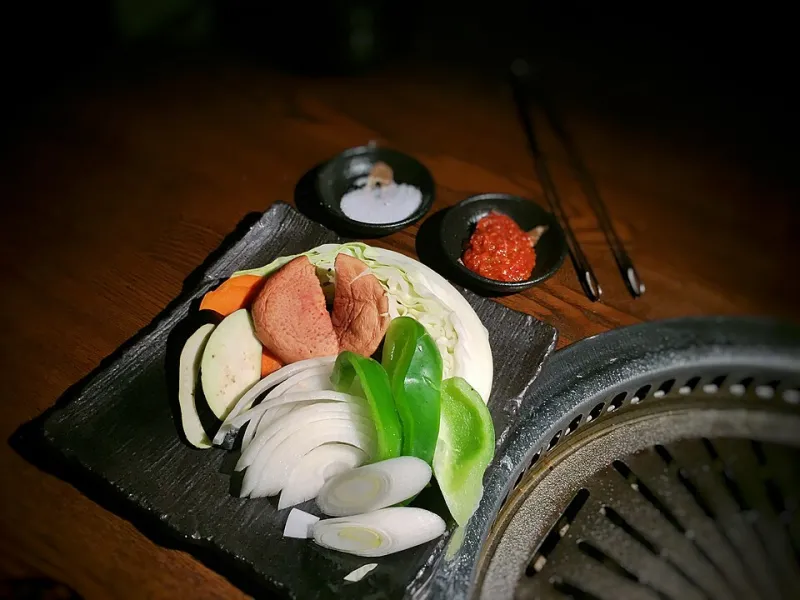
The culinary aspect draws directly from Japan's deep tradition of shun—the consumption of ingredients at the precise peak of their seasonal availability—but hatsuyori adds a layer of ceremony to the first encounter with each season's offerings. A private chef in San Francisco who works with a roster of tech executives described preparing a first-of-spring meal each year that functions almost as a ritual: "We use the first English peas of the season, the first local strawberries. It's not about the menu. It's about marking that something has changed, and that we are present for it."
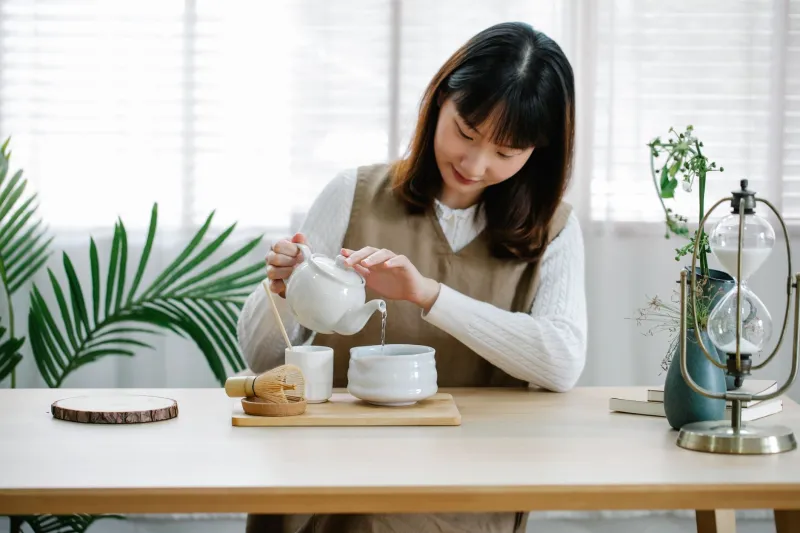
The contemplative element is perhaps the most distinctly Japanese in character. Whether expressed through journaling, meditation, or simply a period of unhurried morning tea, it involves sitting with the transition—acknowledging what the outgoing season carried, and opening, without agenda, to what the arriving one might bring.
Why Now, and Why This
It is worth asking why hatsuyori is finding such fertile ground in American wellness culture at this particular moment. Wellness professionals offer several theories, none mutually exclusive.
One is simple saturation. The market for linear self-improvement—apps, protocols, biometric tracking—has reached a point of diminishing returns for many of the consumers who adopted it earliest and most enthusiastically. "There's a real appetite for something that doesn't require you to optimize," notes Dr. Serena Whitfield, a psychologist who advises several luxury wellness brands. "Seasonal ritual offers participation without performance. You don't have to be good at it. You just have to show up."
Another theory points to a broader cultural hunger for meaning-making practices that are grounded in the physical world rather than abstracted from it. In an era of increasingly screen-mediated experience, the invitation to notice the actual quality of October air—to let it mean something—carries a weight it might not have a generation ago.
Bringing Hatsuyori Home
For those drawn to explore this sensibility, practitioners consistently caution against over-engineering the entry point. Hatsuyori is not a program. It does not come with a subscription tier or a branded candle.
A useful beginning, Okonkwo suggests, is simply to identify one object, one food, and one quiet practice that you associate with each of the four seasons—and to introduce them with deliberateness when the time comes. Not because a calendar tells you to, but because you have been paying enough attention to notice that the season has genuinely arrived.
"The Japanese understanding of seasonal transition is that it sneaks up on you if you're not watching," she says. "The practice is really just the practice of watching. Everything else follows from that."
In a wellness culture that has long prized the dramatic reset—the week-long detox, the silent retreat, the radical reinvention—there is something quietly radical about a philosophy that asks only for attentiveness. No before-and-after. No transformation arc. Just the turning of the year, met with open hands.
That, perhaps, is the most distinctly Japanese gift that hatsuyori offers the American household: the suggestion that renewal need not be achieved. It need only be received.