The Considered Gift: How Japan's Omiyage Tradition Is Elevating the Art of American Business Hospitality
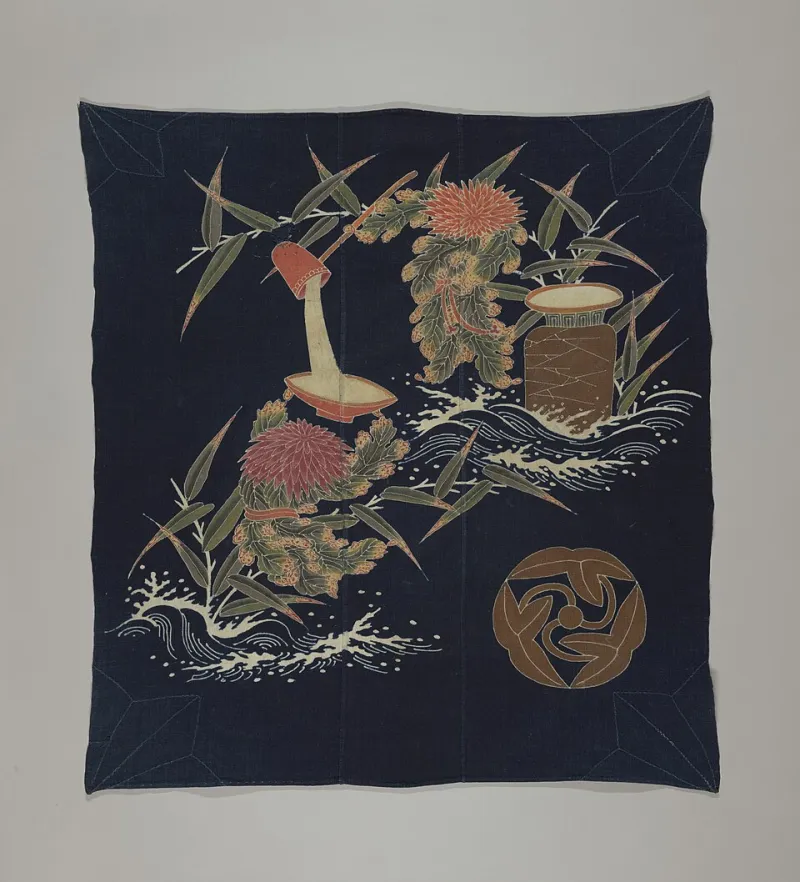
Photo: Unknown artistUnknown artist, Public domain, via Wikimedia Commons
The branded tote bag. The fruit basket assembled by a fulfillment warehouse. The bottle of wine selected by someone whose name does not appear on the card. American corporate gifting has long operated on the logic of gesture over substance—a signal that a gift was sent, rather than an expression that a gift was chosen. The recipient understands this, the sender understands this, and both parties proceed accordingly, treating the exchange as social punctuation rather than genuine communication.
A growing number of American executives, however, are choosing a different approach. And they are finding their model not in a business school curriculum but in a Japanese cultural practice that predates the modern corporation by several centuries.
What Omiyage Actually Means
Omiyage is a word that translates imprecisely as "souvenir gift," but the translation misses nearly everything that makes the practice meaningful. In Japan, when one travels—whether for business, leisure, or pilgrimage—the expectation is that one will return bearing carefully selected gifts for colleagues, family members, and neighbors. These gifts are almost always edible, almost always regionally specific, and almost always presented in packaging that is itself a form of communication: the wrapping, the box, the particular confection inside all announce where one has been and, by extension, that one was thinking of the recipient while there.
The practice is not incidental to Japanese social life. It is, in many ways, its connective tissue. Omiyage acknowledges that one's absence creates a small debt of attention, and that the gift is the means of repaying it—not financially, but emotionally. The gift says: I was elsewhere, and you were still present in my mind.
This is a fundamentally different proposition from anything found in a corporate gifting catalog.
Why American Executives Are Taking Notice
The adoption of omiyage logic in American professional culture has been gradual and largely organic, emerging from the same impulse that has driven broader interest in Japanese aesthetics among the design-conscious and the discerning. Several factors have accelerated it.
The pandemic reshuffled professional relationships in ways that made their human dimensions newly visible. Executives who had once conducted business at arm's length found themselves navigating deeply personal conversations about health, loss, and uncertainty with clients and colleagues. When in-person interaction resumed, many found that the old conventions of professional formality felt inadequate—that the relationships they wished to sustain required a more personal register.
At the same time, a generation of American entrepreneurs with significant exposure to Japanese business culture—through travel, through the influence of Japanese design and manufacturing philosophy on Silicon Valley, through a genuine aesthetic affinity—began importing the omiyage sensibility into their own professional practice.
"I started doing this after a series of trips to Japan for work," says one founder of a sustainable materials company based in San Francisco. "I noticed that when Japanese colleagues brought gifts back from their home regions, it changed the entire atmosphere of a meeting. There was something in the room that hadn't been there before—a kind of warmth, a sense that the relationship existed outside the transaction. I wanted to create that."
The Craft of Selection
What distinguishes the omiyage approach from conventional corporate gifting is not the price point—though the gifts are often beautifully made—but the quality of attention they represent. The practice demands that the giver know something specific about the recipient, something about the place from which the gift comes, and something about why the two are connected.
This is, by American standards, a considerable investment of thought. It is also, by the account of those who practice it, one that yields considerable returns.
Luxury food purveyors and bespoke gifting services have begun catering explicitly to this sensibility. Small-batch producers of regionally specific American foodstuffs—a family-owned honey from the Hudson Valley, a single-origin chocolate from a Hawaii estate, a tin of hand-packed smoked salmon from a Washington State smokehouse—have found a new and enthusiastic market among executives seeking gifts that carry genuine provenance. The message encoded in such a gift is legible without explanation: I went somewhere specific, I found something made by someone particular, and I brought it back for you.
Several bespoke concierge services now offer what they describe as "intentional gifting" consultations, in which a client's travel itinerary is cross-referenced with their professional relationships to identify appropriate omiyage-style gifts for each. The service is, in essence, the formalization of an act of attention—which is, of course, also what omiyage has always been.
Packaging as Communication
One dimension of the Japanese gifting tradition that American practitioners find particularly resonant is the role of presentation. In Japan, the wrapping of a gift is not decorative afterthought but integral meaning. The furoshiki—a square of cloth used to wrap and carry objects—communicates care through the very act of its folding. The choice of paper, the placement of a ribbon, the inclusion of a handwritten note: all of these are understood as extensions of the gift itself.
This sensibility is finding expression in a new generation of American packaging artisans who bring a similar philosophy to their work. Letterpress cards, hand-dyed tissue paper, beeswax seals, and cloth wrapping in natural dyes are appearing with increasing frequency among the gifting choices of executives who have absorbed the omiyage lesson: that the manner of giving is itself a form of communication.
What This Reveals About Us
The omiyage trend in American business culture is, at its most interesting, a symptom of something larger—a growing hunger for professional relationships that feel like genuine human connections rather than managed transactions. The gift that teaches, in this context, teaches the recipient something not only about where the giver has been, but about the kind of attention the giver is willing to offer.
In a professional landscape crowded with automated email campaigns and algorithmically timed check-ins, the handpicked gift—the one that required thought, knowledge, and a measure of care—stands out with almost disarming clarity. It announces, without a word of explanation, that the giver has chosen to see the recipient as a person rather than a contact.
This is, in the end, the oldest and most enduring form of luxury: not the rarity of an object, but the quality of attention that preceded it. Japan has known this for centuries. America is learning.