Ink and Intention: Why American Executives Are Turning to Japanese Letter-Writing to Rebuild Trust
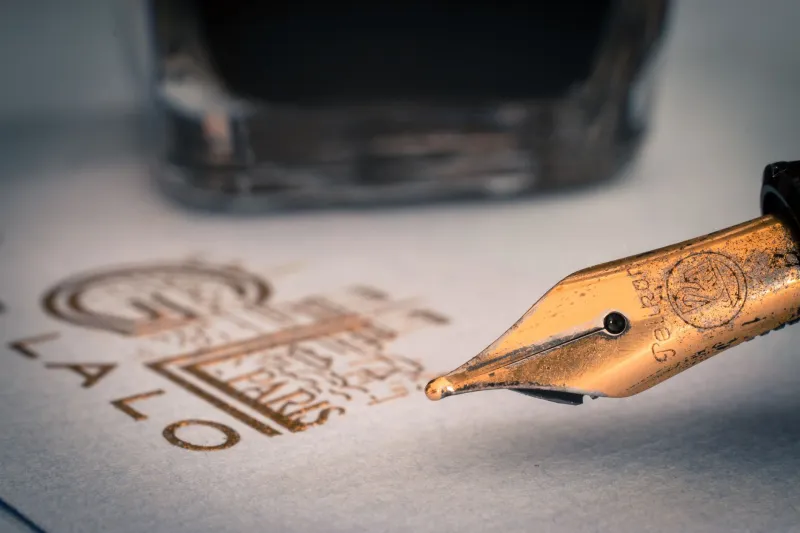
There is a particular stillness that descends upon a room when someone produces a handwritten letter. In an age when a CEO's apology is more likely to arrive as a pinned tweet or a meticulously drafted press statement, the sight of ink pressed deliberately into fine paper carries a weight that no font can replicate. Across certain corners of American corporate culture — quietly, without announcement — this act is being reclaimed. And its inspiration, for a growing number of executives and their advisors, traces directly to Japan.
The Discipline Behind Tegami
In Japan, the formal letter, known as tegami, has long occupied a place of profound cultural significance. Unlike casual correspondence, a tegami is composed with ceremony. The writer considers not only the words but the season, the paper, the ink, and the particular formality required by the recipient and the occasion. A letter of apology — known as わびじょう (wabijō) — is among the most demanding forms, requiring the writer to demonstrate genuine contrition without the buffer of distance that digital communication affords.
What makes this tradition remarkable is its insistence on exposure. To write by hand is to leave evidence of hesitation, of correction, of the very human effort behind the words. A crossed-out line or a slightly uneven margin does not diminish a tegami; in many cases, it deepens its sincerity. The Japanese concept of makoto, often translated as sincerity or integrity, is understood to be most legible not in polished performance but in unmediated effort.
For American executives accustomed to crisis communication teams and legal review, this is a genuinely radical proposition.
Why Digital Fluency Is No Longer Enough
The fatigue surrounding corporate digital communication has reached a kind of cultural saturation point. Consumers and colleagues alike have grown adept at detecting the particular cadence of a statement drafted by committee — the passive constructions, the careful hedging, the conspicuous absence of a first-person subject. Even video apologies, once considered a more personal alternative, have begun to feel performative in an era of media coaching and ring-light aesthetics.
Handwriting short-circuits this skepticism in a way that is almost physiological. Graphologists and organizational psychologists have noted that handwritten correspondence activates a different kind of attention in the reader — one associated with receiving something rare and irreplaceable. A letter cannot be forwarded to a thousand inboxes simultaneously. It cannot be screenshot and stripped of context. It arrives as an object, singular and intentional, and it demands to be held.
Several executive coaches in New York and San Francisco have begun incorporating elements of Japanese epistolary practice into their work with senior leaders navigating professional crises. The emphasis, they note, is not on calligraphy as performance but on the discipline of slowing down — of composing a message that cannot be recalled, revised, or retweeted once it leaves the writer's hands.
The Ritual of Composition
In Japanese letter-writing tradition, the physical materials of correspondence are understood to carry meaning independent of the words themselves. The selection of washi paper — handmade, often with subtle botanical inclusions — signals that the writer has invested in the act before a single word has been set down. The choice of a brush versus a fountain pen communicates something about the register of formality. Even the manner of folding and enclosing a letter follows conventions that the recipient is expected to recognize.
American executives drawn to this practice rarely replicate every element of Japanese protocol, nor would it be culturally appropriate to do so. What they absorb instead is the underlying logic: that the material form of a message is inseparable from its meaning. A letter written on heavy cotton-rag stationery, sealed with wax, and delivered by hand to a colleague's office communicates a level of regard that a 300-word email — however eloquent — structurally cannot.
Stationery houses in cities such as New York, Chicago, and Los Angeles have reported a quiet but sustained increase in demand for premium writing papers and correspondence sets among professional clientele. Several have noted that customers are specifically seeking guidance on appropriate formats for letters of apology or formal acknowledgment — categories of correspondence that had all but disappeared from their order books a decade ago.
Accountability as Aesthetic
There is something worth examining in the convergence of aesthetics and ethics that the tegami tradition represents. In Japanese professional culture, the manner in which an apology is offered is understood to be as morally significant as the apology itself. A resignation letter penned carelessly, or an acknowledgment of wrongdoing delivered without appropriate gravity, diminishes the act it is meant to perform. Form and content are not separable.
This philosophy sits in interesting tension with the American tendency to prioritize efficiency and directness in professional communication. Yet it also resonates with a growing appetite, particularly among affluent and design-conscious Americans, for things that are made with intention. The same sensibility that drives interest in handcrafted furniture, natural dye textiles, and slow-food dining is beginning to find expression in the domain of professional correspondence.
To write a letter by hand — to sit with the discomfort of an error that must be acknowledged rather than deleted — is, in this reading, a form of aesthetic commitment as much as an ethical one. It asks the writer to be present in a way that digital communication does not require and cannot reward.
What the Letter Leaves Behind
Perhaps the most consequential difference between a handwritten letter and its digital equivalent is the question of permanence. An email can be deleted. A statement can be taken down from a website. A handwritten letter endures as a physical artifact — something that can be kept, returned to, or shared as testimony to a moment of genuine reckoning.
In Japan, significant letters are often preserved across generations, understood as documents of character rather than merely of communication. The idea that a letter of apology might outlast the crisis that occasioned it — might even become, in time, evidence of the writer's integrity — gives the act a weight that most American executives have not been trained to consider.
For those who are beginning to consider it, the lesson of tegami is not primarily about penmanship or paper quality. It is about the willingness to be legible — to allow one's effort, hesitation, and care to be read by another person without the mediation of a screen. In a professional landscape saturated with managed messaging, that willingness may be the most sophisticated signal of all.