Hospitality Without Performance: What Omotenashi Is Teaching America's Finest Hotels to Unlearn

Consider two moments of hotel service. In the first, a bellman greets you at the entrance with practiced enthusiasm, recites your name with deliberate warmth, and offers a scripted welcome that has been delivered, with minor variations, to every guest who has passed through those doors today. In the second, you arrive after a long flight to find your room already set to a slightly cooler temperature than the hotel standard—because someone noticed, from your reservation pattern, that you always request this—and a glass of still water, not sparkling, waiting on the nightstand without having been asked for.
Only one of these is hospitality. The other is theater.
This distinction is at the heart of omotenashi, the Japanese approach to hosting that has no precise English translation and that American luxury hospitality is only beginning to genuinely understand. The word is often rendered as "wholehearted service" or "anticipatory hospitality," but both translations flatten something essential. Omotenashi is not a service standard. It is an orientation—a state of genuine attentiveness to the other person that exists prior to any script, any protocol, any performance review.
The Limits of "The Customer Is Always Right"
American hospitality culture was built, in significant part, on a single organizing principle: the guest's stated preference is sovereign. This idea has generated genuine innovations in comfort and convenience, and it has produced a hospitality industry that is, by global standards, remarkably responsive to explicit requests. But it has also produced something less admirable: a service culture that is highly reactive and almost entirely performative.
The "customer is always right" model places the burden of communication entirely on the guest. You must identify your own needs, articulate them clearly, and then evaluate whether the response was adequate. The service provider's role is to fulfill stated requests with efficiency and apparent warmth. What is neither required nor particularly valued in this framework is the deeper attentiveness that would make the request unnecessary in the first place.
The result, in even the most celebrated American luxury hotels, is a form of hospitality that is technically excellent and experientially hollow. The staff are trained, the amenities are impeccable, the responses to requests are prompt. But the guest rarely has the experience of being genuinely seen—of encountering a host who has considered their comfort before being asked to.
What Omotenashi Requires
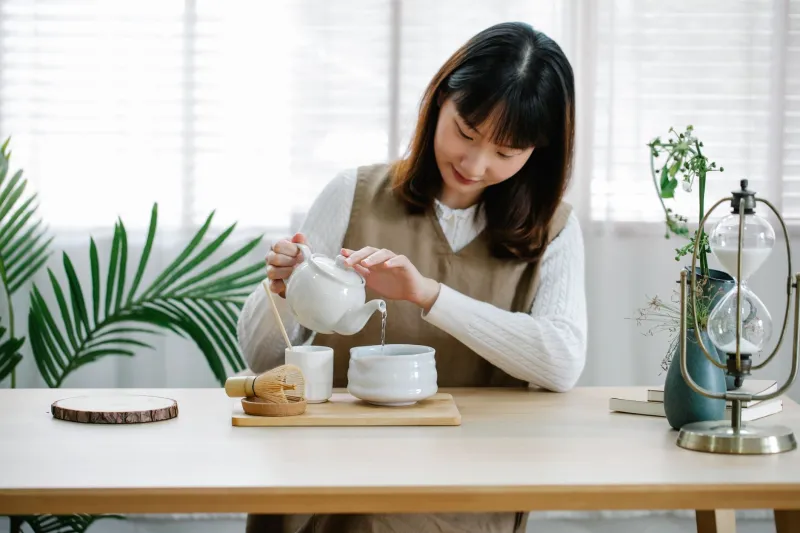
The philosophical roots of omotenashi run through several centuries of Japanese culture, connecting the tea ceremony's radical attentiveness to the guest's experience, the ryokan tradition of hospitality so personal it borders on the familial, and the broader Japanese value of ki ga kiku—the quality of being perceptive, of noticing what others need without being told.
In practice, omotenashi demands several things that American hospitality culture has not traditionally prioritized. It requires observation—genuine, sustained attention to the guest as an individual, not a category. It requires memory, both institutional and personal, that allows patterns to be recognized and preferences to be honored without prompting. And it requires a particular kind of restraint: the discipline to offer care without drawing attention to the offering, so that the guest experiences comfort without the slight awkwardness of feeling managed.
This last element is perhaps the most counterintuitive for American hospitality professionals. In the dominant American model, service is made visible—the grand gesture, the conspicuous upgrade, the manager who appears at the table to personally inquire about the meal. These are signals of attentiveness, but they are also performances that require the guest to respond, to acknowledge, to participate in the theater. Omotenashi operates differently. The care is real; the performance is absent. The guest simply finds that things are as they should be, without quite knowing how that came to be.
The Hotels Quietly Changing Their Approach
A number of American luxury properties have begun, in recent years, to move meaningfully in this direction—not always with explicit reference to the Japanese model, but with outcomes that are recognizably aligned with its principles.
The shift tends to manifest in specific, unglamorous operational changes. Reservation and stay data is analyzed not merely for billing purposes but to build genuine preference profiles that inform every subsequent interaction. Staff are trained not in scripted warmth but in the art of observation—how to read a guest's pace, their body language, the subtle signals of fatigue or distraction or delight. And the definition of a successful interaction is quietly revised: not "the guest expressed satisfaction" but "the guest's experience was smooth enough that they had nothing specific to comment on."
This last metric is radical in an industry accustomed to measuring itself by the volume and enthusiasm of positive feedback. Omotenashi, at its most refined, aims for a guest experience so seamlessly considerate that it leaves no obvious trace. The highest compliment, in this framework, is not effusive praise but a kind of contented ease—the guest who leaves feeling, without being able to articulate precisely why, that they were genuinely cared for.
Dignity at the Center
There is an ethical dimension to omotenashi that deserves direct attention, particularly in an American context where the power dynamics of service relationships carry historical weight. The Japanese model is unusual in that it does not position the host as subordinate to the guest. The host is an expert—in comfort, in anticipation, in the particular craft of making another person feel well. The guest is honored, but the host is not diminished.
This framing has practical consequences. Staff operating within an omotenashi-informed culture are not expected to absorb poor treatment with a smile, because the guest's dignity and the host's dignity are understood as equally real and equally worth protecting. The "customer is always right" model has, in many American contexts, licensed a kind of guest behavior that no serious hospitality philosophy should accommodate. Omotenashi, by centering dignity rather than compliance, offers a more sustainable and more genuinely respectful alternative.
A New Standard of Luxury
For the American luxury consumer, the appeal of this approach is both aesthetic and deeply personal. In an era of abundant options and relentless stimulation, what feels genuinely rare is not a larger suite or a more elaborate amenity package. It is the experience of being known—of arriving somewhere and finding that the people who prepared for your arrival actually thought about you, specifically, as an individual with particular needs and preferences.
This is what omotenashi, at its most realized, delivers. Not a performance of care, but care itself. Not the appearance of attentiveness, but attentiveness that has already acted before you knew you needed it to.
For American hospitality, learning this may require unlearning quite a lot. But the properties that manage it are discovering something the finest Japanese inns have always known: that the most memorable experience of luxury is not the one that impresses you. It is the one that, somehow, already knew you.