When the Moment Speaks: How the Japanese Concept of Kigo Is Redefining the Art of American Entertaining
There is a particular kind of dinner party that lingers in the memory long after the last glass has been cleared. The food was perhaps not extraordinary. The venue may have been modest. Yet something about the evening felt precisely, almost inexplicably, right — as though the host had somehow synchronized the gathering with an invisible current running beneath the season itself. In Japan, this quality is not left to chance. It is cultivated through a discipline called kigo.
Kigo (季語), translated loosely as "seasonal word," originates within the formal structure of haiku poetry. Each carefully selected term — a reference to cherry blossoms, to the first frost, to the cry of a particular insect — carries within it the full emotional weight of a season, signaling to the reader not just a time of year but a mood, a transience, a shared cultural understanding. To deploy a kigo well is to speak directly to something ancient and felt, rather than merely observed.
What began as a literary convention is now traveling far beyond the page. In Manhattan penthouses and Napa Valley estates, in the private dining rooms of Chicago and the curated salons of Los Angeles, a philosophy rooted in seasonal attunement is quietly transforming the way discerning Americans conceive of their social and professional lives.
Beyond Decoration: The Philosophy of Timeliness
The conventional American approach to event planning tends toward spectacle — a maximalist logic that equates memorability with scale, novelty, or expense. Kigo proposes an entirely different measure of success. An event aligned with its moment, this philosophy argues, requires no justification. It simply resonates.
Consider the difference between a dinner party centered around the first local asparagus of spring — served simply, acknowledged openly, treated as the occasion itself — versus one that imports exotic ingredients from across the globe to signal abundance. The former invites guests into a shared experience of the present moment. The latter, however lavish, risks feeling curiously disconnected from any particular time or place.
This distinction matters deeply to a generation of American hosts who have grown quietly weary of the performative. The most sought-after social experiences today are those that feel considered rather than constructed — gatherings where the choice of date, menu, palette, and even conversation topic seems to arise naturally from the world just outside the window.
Kigo as Personal Brand Strategy
The influence of kigo extends well beyond the private dinner table. Forward-thinking professionals are beginning to apply its logic to the architecture of their public presence — recognizing that timing, like tone, is an essential element of personal branding.
In practice, this might mean choosing to launch a new creative project in autumn, when the cultural mood turns naturally toward reflection and depth, rather than in the relentless optimism of early January. It might mean scheduling a significant client dinner during the brief, golden window of late September, when the air carries a particular clarity and the instinct toward meaningful conversation seems to sharpen. It might mean sending a handwritten note that references a specific quality of the current season — a single line acknowledging the lengthening evenings or the particular stillness of a midwinter afternoon — rather than a generic expression of gratitude.
These choices signal something that no amount of polished messaging can replicate: the impression that one is genuinely present, genuinely attentive, genuinely in tune with the world one shares with others. In an era saturated with automated outreach and algorithmically timed communications, this quality has become extraordinarily rare — and correspondingly valuable.
The Seasonal Table as Social Architecture
For hosts who have begun to explore kigo-informed entertaining, the transformation often begins at the table. Rather than planning menus around personal preference or trending ingredients, they start by asking a more fundamental question: what does this particular moment in the year want to offer?
In the Japanese culinary tradition, this inquiry is second nature — it is the principle of shun, the pursuit of ingredients at their precise peak. But kigo adds a layer of intentionality that goes beyond freshness. It asks that the entire sensory experience of a gathering — the colors on the table, the weight of the textiles, the temperature of the room, the pace of the evening — be drawn into alignment with the emotional character of the season.
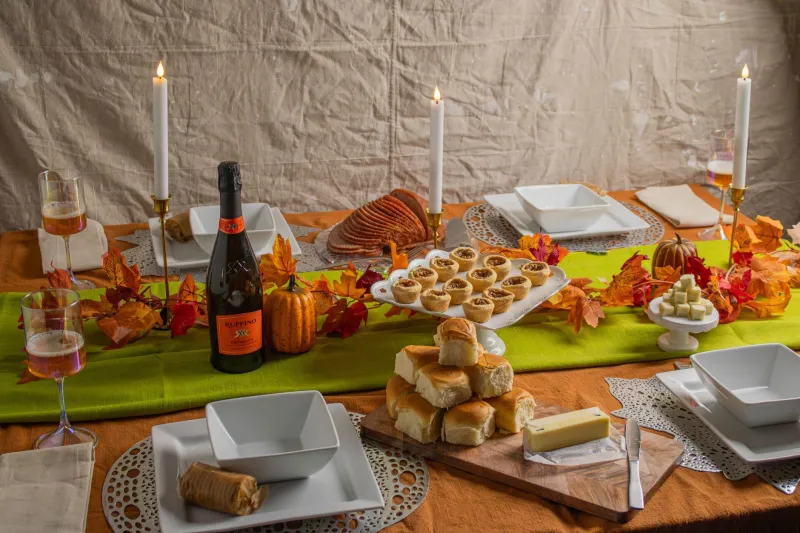
A late-summer gathering in this spirit might feature linens in the muted golds and dusty greens of a garden moving toward its end, a menu built around the last stone fruits of the year, and a conversational atmosphere that gently acknowledges the bittersweet quality of transition. The effect is not melancholy but deeply alive — a gathering that honors the specific gravity of its moment rather than attempting to override it.
Networking With Seasonal Intelligence
Perhaps the most sophisticated application of kigo thinking in American professional life is its use as a framework for relationship cultivation. The most effective connectors have always understood intuitively that timing governs the success of an introduction or invitation as surely as content does. Kigo simply makes this intuition explicit and actionable.
Reaching out to a prospective collaborator in the contemplative quiet of early February — when the year is young but the frenzy of January has subsided — carries a different emotional register than the same message sent in the chaotic final weeks of December. Hosting a small gathering for key contacts in the soft, unhurried days between Thanksgiving and the holiday rush acknowledges a shared human experience of the calendar in a way that feels genuinely generous.
These are not merely tactical calculations. They reflect a deeper understanding that human beings are seasonal creatures, responsive to the rhythms of the natural world even when — perhaps especially when — they are embedded in the most urban and climate-controlled of environments. To communicate with awareness of this truth is to communicate with a rare and quietly compelling sophistication.
Cultivating the Kigo Sensibility
Adopting kigo as a guiding principle does not require fluency in Japanese poetics or adherence to any formal system. It asks, rather, for a quality of attention — a willingness to pause before planning and to ask what the season itself is already saying.
This might begin simply: with a walk taken before a gathering is planned, with a market visit before a menu is conceived, with a moment of genuine stillness before a significant message is composed. Over time, this practice deepens into something more instinctive — a natural fluency in the language of the present moment.
The Japanese have long understood that the most powerful gestures are those that feel inevitable — as though they could not have been made at any other time, in any other way. In a cultural landscape increasingly defined by the generic and the instantaneous, this quality of precise, seasonal attentiveness may be the most quietly radical form of elegance available to the American host.
The moment, it turns out, has always been speaking. Kigo simply teaches us how to listen.