The Measured Distance: How the Martial Arts Principle of Ma'ai Is Transforming the Way American Executives Handle High-Stakes Conversations
There is a moment in every difficult conversation when the outcome is still undecided. A fraction of a second — or several deliberate days — during which the person who controls the space between stimulus and response holds all the advantage. In Japanese martial arts, that space has a name: ma'ai.
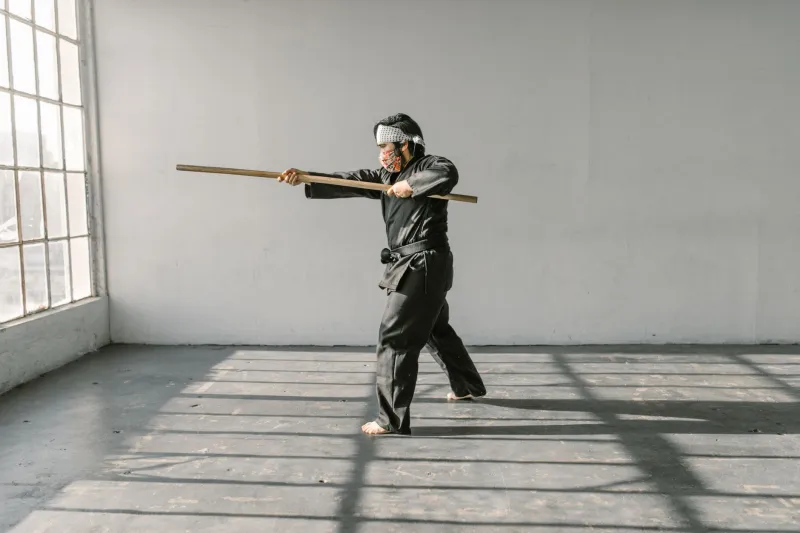
Literally translated as "interval distance," ma'ai refers to the precise physical and temporal gap a trained fighter maintains between themselves and an opponent. Too close, and one becomes reactive, vulnerable to attack. Too far, and the moment passes without meaningful engagement. The mastery lies in knowing exactly where to stand — and for exactly how long.
Among a growing cohort of American executives, this centuries-old combat philosophy is quietly reshaping how they approach conflict, negotiation, and the kind of conversations that can define or derail a career.
A Philosophy Forged in the Dojo
Ma'ai is not a passive concept. In disciplines such as kendo, aikido, and iaido, it requires constant, conscious calibration. A practitioner who understands ma'ai does not simply react to an opponent's movement — they have already anticipated it, positioned themselves with precision, and chosen their moment of engagement rather than having it chosen for them.
The philosophy extends beyond the physical. Japanese martial tradition has long recognized that true ma'ai encompasses psychological distance as well: the internal composure that prevents a fighter from being drawn into an emotional response that clouds judgment. The sword, in this tradition, is only as precise as the mind that wields it.
It is this dual nature — spatial and psychological — that makes ma'ai so unexpectedly applicable to the modern American workplace.
The Boardroom as the Dojo
Consider the dynamics of a high-stakes negotiation or a performance review that has taken an unexpected turn. The instinct, particularly in American professional culture, is to respond immediately — to demonstrate decisiveness, to hold ground, to show that one cannot be rattled. Speed is frequently mistaken for strength.
But leaders who have studied or absorbed Japanese leadership philosophy are beginning to recognize this reflex as a liability rather than an asset. When a colleague delivers an aggressive challenge across the conference table, the executive who pauses — who creates deliberate ma'ai — is not hesitating. They are controlling the interval. They are choosing the terms of engagement.
This is a meaningful distinction. Hesitation is the absence of strategy. Ma'ai is the presence of it.
The Temporal Dimension: Distance Measured in Hours, Not Inches
In the dojo, ma'ai is measured in feet. In the boardroom, it is often measured in hours — or even days.
Japanese business culture has long practiced a form of temporal ma'ai that Americans frequently misread as indecision. The deliberate pause before responding to a proposal, the carefully considered written reply that arrives two days after an urgent email, the meeting that ends without a commitment and resumes only after all parties have had time to reflect — these are not signs of uncertainty. They are expressions of disciplined control over the interval.
American executives who have spent time working with Japanese counterparts often describe an initial frustration with this pace, followed by a dawning recognition of its strategic elegance. When the response finally arrives, it is precise. It does not overreach. It does not betray emotion. It arrives from exactly the right distance.
For leaders navigating the compressed timelines of American corporate life — where a Slack message left unanswered for four hours can be read as a slight — adopting even a modified version of this temporal discipline represents a significant shift in operating philosophy.
Psychological Distance as a Leadership Practice
Beyond timing, ma'ai offers a framework for emotional regulation that translates directly into leadership effectiveness. The concept invites practitioners to ask a deceptively simple question before every response: Am I engaging from the right distance?
Too close — emotionally enmeshed, personally threatened, reactive — and the response will almost certainly be imprecise. It may win the moment and lose the relationship. It may satisfy the instinct to defend and sacrifice the opportunity to lead.
Too far — coldly disengaged, dismissive, withholding — and the response fails to connect. Leadership, like combat, requires genuine presence.
The leaders who have internalized ma'ai tend to describe a similar practice: when a conversation begins to escalate, they cultivate an internal step backward. Not a withdrawal, but a repositioning. They create enough psychological space to observe their own reaction before acting on it — to ask whether their response is being shaped by the present moment or by something older and less relevant.
This is, in essence, what the finest negotiators have always done. Ma'ai simply gives it a name, a lineage, and a discipline.
The American Context: Unlearning Speed
Adopting ma'ai in an American professional context requires confronting a deeply embedded cultural value: the equation of speed with competence. In many American organizational cultures, the leader who responds instantly is perceived as engaged, decisive, and confident. The leader who pauses is sometimes perceived as uncertain or, worse, evasive.
Shifting this perception — both internally and within one's organization — is perhaps the most demanding aspect of the practice. It requires not only personal discipline but a willingness to reframe how one's leadership style is communicated and understood.
Some executives have begun introducing the concept explicitly within their teams, framing deliberate response intervals not as delays but as a quality standard. Others practice it quietly, allowing the results — more considered decisions, fewer conversational escalations, stronger negotiating outcomes — to make the case without explanation.
Precision Over Force
What ma'ai ultimately offers is not a technique but a philosophy of engagement: the conviction that precision, cultivated through discipline and distance, is more powerful than force deployed in haste.
In the dojo, this principle is demonstrated with every controlled exchange. In the boardroom, it reveals itself more gradually — in the negotiation that concludes on favorable terms because one party never allowed themselves to be drawn into reactive territory, in the difficult conversation that transformed rather than damaged a professional relationship, in the leader who responded to provocation with such measured clarity that the provocation itself lost its power.
The Japanese have understood for centuries what American leadership culture is only beginning to explore: that the space between action and reaction is not empty. It is, in fact, where everything consequential happens.
To master that space — to stand within it with composure, precision, and full awareness — is not a restraint on leadership. It is its highest expression.