Lunch as Lesson: What Japan's School Meal Ritual Reveals About the One Thing Affluent American Families Are Failing to Teach
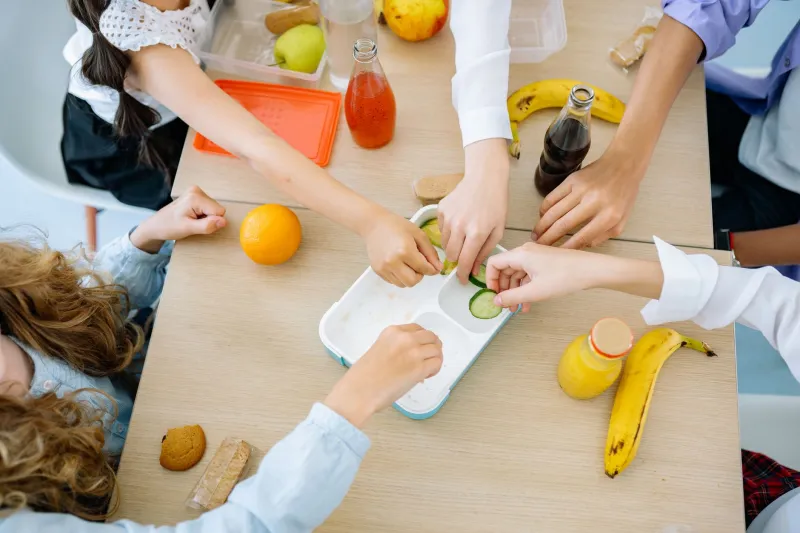
Visit an elementary school in Japan during the midday meal and you will witness something that has no direct equivalent in the American educational experience. The cafeteria staff does not emerge to serve the children. The children serve each other. Wearing white coats and surgical caps, small groups of students rotate through weekly duties: ladling soup, portioning rice, carrying trays to classmates who are seated and waiting. When the meal concludes, those same students clear, clean, and restore the space. No adult directs the operation. The ritual is understood.
This is kyushoku, the Japanese school lunch system—and it is, by any serious pedagogical measure, one of the most effective character-formation practices in contemporary education. Yet it remains almost entirely unknown to the American parents who spend tens of thousands of dollars annually on private schooling, tutoring, and enrichment programs designed to give their children every possible advantage.
The irony is considerable. And the implications, for families who take the question of raising capable, grounded human beings seriously, deserve careful attention.
The Architecture of the Ritual
To understand why kyushoku works, it helps to understand what it actually asks of children. The system is not simply a logistical arrangement for distributing food. It is a structured encounter with responsibility—daily, non-optional, and embedded within the social fabric of the classroom rather than delegated to an invisible service class.
Each student, regardless of academic ability or family background, participates equally in the service rotation. The child who excels at mathematics serves soup alongside the child who struggles with reading. The ritual does not recognize hierarchy. It asks every student to perform a function that is genuinely necessary—not as a symbolic exercise, but because if the food is not served, no one eats.
This is a profoundly different experience from the one most American children have with food service, which is to say: essentially none. In the typical American school cafeteria, food appears. Children collect it, consume it, and depart. The labor that produced and delivered the meal is entirely invisible. The child learns nothing from the transaction except that meals arrive when you are hungry.
For affluent families, this invisibility is often even more pronounced. Private school dining halls, home kitchens staffed with outside help, restaurant meals as a default—these are arrangements that efficiently remove children from any contact with the work of feeding people. The convenience is real. The cost, measured in character formation, is rarely examined.
What Responsibility Actually Feels Like
There is a meaningful difference between being told that you are responsible and being placed in a situation where responsibility is simply the condition of the moment. Kyushoku creates the latter. A child holding a ladle, standing before a line of classmates who are waiting and hungry, is not reflecting on the concept of service. They are performing it, in real time, with real stakes.
Child development researchers have long noted that responsibility is most effectively cultivated through genuine contribution—tasks that matter to others, not merely to the child's own development. Chores assigned for the sake of building character carry a different psychological weight than tasks performed because the household genuinely depends on them. Kyushoku is effective precisely because it is the latter. The community meal would not happen without the children's participation. That is not a teaching metaphor. It is simply true.
American parents who have attempted to build similar structures at home often report the same discovery: the moment a task becomes genuinely necessary rather than pedagogically assigned, children engage with it differently. The shift in attitude is not gradual. It tends to be immediate.
The Private School Question
For families enrolled in America's most prestigious private schools, the kyushoku model raises an uncomfortable but important question about what those institutions are actually optimizing for. The academic preparation is frequently exceptional. The extracurricular programming is often remarkable. But the daily encounter with communal obligation—the unambiguous experience of being needed by one's community, of contributing something that cannot be delegated—is conspicuously absent from most elite American educational environments.
Several progressive independent schools have begun experimenting with service-integrated dining programs, with results that their administrators describe as transformative. One head of school at a K-8 institution in the Northeast noted that the introduction of a student-led lunch service had produced visible changes in classroom dynamics within a single semester. "Children who had never spoken to each other were suddenly working together every day on something concrete," she observed. "The social architecture of the school changed. The way students talked about each other changed."
This is not a surprising outcome to anyone familiar with the Japanese model. Community is not built through proximity alone. It is built through shared labor—through the experience of needing and being needed, repeated often enough to become ordinary.
Bringing the Ritual Home
For parents who cannot wait for their child's school to adopt a kyushoku-inspired program, the domestic translation is more accessible than it might appear. The principle is straightforward: make the preparation and service of family meals a genuine collective responsibility, not a teaching exercise supervised by adults, but an actual operational expectation from which the family meal depends.
This means assigning specific, non-negotiable roles—not rotating suggestions, but structured duties that children understand to be theirs—and then allowing the consequences of non-performance to be real. If the table is not set, dinner is delayed. If the dishes are not cleared, the kitchen remains in disorder until the responsible party addresses it. The discomfort of these consequences is not a failure of the system. It is the system working.
It also means resisting the parental instinct to intervene when the execution is imperfect. A child who ladles soup unevenly is learning something that a perfectly portioned bowl cannot teach. The lesson is not in the outcome. It is in the doing.
The Table as Classroom
Japan's kyushoku system endures not because it produces better-nourished children—though the nutritional standards of the program are genuinely impressive—but because it produces children who understand, at a cellular level, that they are participants in a community rather than recipients of its services. That understanding, formed through daily repetition across years of schooling, shapes the adult.
American parents who are investing seriously in their children's formation would do well to consider what the family table is currently teaching—and what a small, deliberate restructuring of that daily ritual might begin to build in its place. The lesson does not require a white coat or a surgical cap. It requires only a genuine task, a community that depends on it, and the patience to let children discover what it means to be truly useful.