Beyond the Exit: How Japanese Wisdom Is Teaching Ambitious Americans to Leave Well
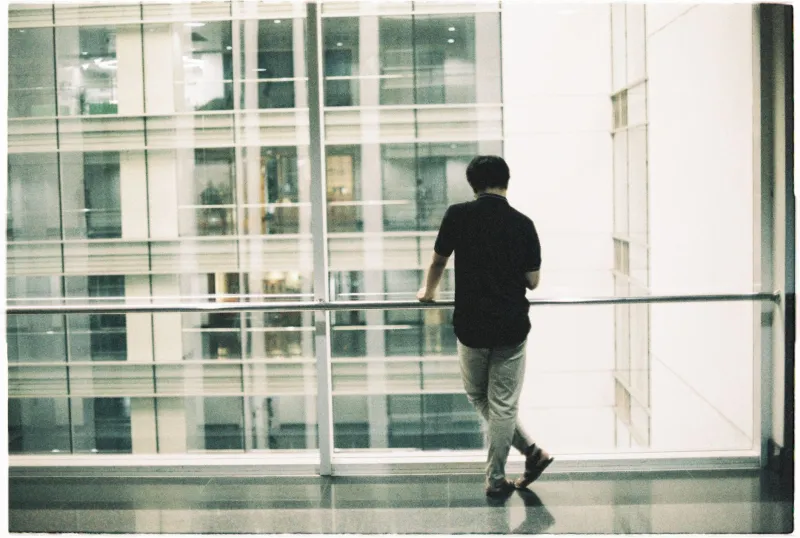
There is a particular kind of restlessness that visits accomplished people in the years before retirement. It is not the restlessness of boredom, nor of regret. It is something more searching — a quiet insistence that the story is not yet finished, even as the calendar suggests otherwise. In Japan, this feeling is not treated as a problem to be managed. It is treated as a signal to be honored.
Across American boardrooms and creative studios, a meaningful conversation is beginning to take shape around the way high-achieving individuals choose to close their professional chapters. Informed by Japanese concepts of purpose, continuity, and graceful transition, a new model of retirement is emerging — one that looks far less like an exit and far more like an evolution.
The Concept That Reframes Everything
Most Americans who have encountered the word ikigai have met it in a simplified form: a Venn diagram promising the intersection of passion, vocation, mission, and profession. The actual concept, as it lives within Japanese culture, is considerably more nuanced. Ikigai — roughly translated as "that which makes life worth waking up for" — is not a destination one arrives at through a career. It is a quality of engagement that ideally deepens over time, including the time that follows formal professional life.
In Japan, the transition out of a primary career is not understood as the cessation of contribution. It is understood as a renegotiation of how one contributes. Elders who have accumulated expertise are expected — culturally, and in many cases structurally — to remain present in their fields, not as decision-makers but as stewards. The transmission of knowledge is considered its own form of meaningful work.
For Americans conditioned to define themselves almost entirely by title and output, this reframing can be genuinely disorienting. It asks a different question: not what did you accomplish, but what will you leave behind that continues to move.
Graceful Transitions in Practice
In Japanese business culture, the practice of transitioning senior leaders with deliberate care — sometimes referred to in professional circles as shotoku, a term encompassing the careful, considered passing of accumulated wisdom — stands in quiet contrast to the American tradition of the golden handshake. Where the latter tends toward ceremony and severance, the former emphasizes continuity. Departing executives are often retained in advisory or mentoring roles, their institutional knowledge treated as an asset rather than a liability to be walked out the door.
This philosophy is beginning to find practical expression among American professionals who have spent time working with or studying Japanese business culture. Several executives at major firms in New York, San Francisco, and Chicago have quietly restructured their final professional years to include formal mentorship programs, curated knowledge-transfer initiatives, and what some describe as "legacy architecture" — the deliberate shaping of systems, relationships, and creative works designed to outlast their own tenure.
One senior partner at a Chicago-based design consultancy spent the final three years of her formal career not pursuing new client work, but documenting the firm's design philosophy in a series of illustrated manuscripts intended for junior staff. She credits an extended working visit to Kyoto — and the influence of Japanese craft traditions, in which masters spend decades transmitting technique to apprentices — with reshaping her understanding of what professional responsibility actually means.
The Aesthetic of Ending Well
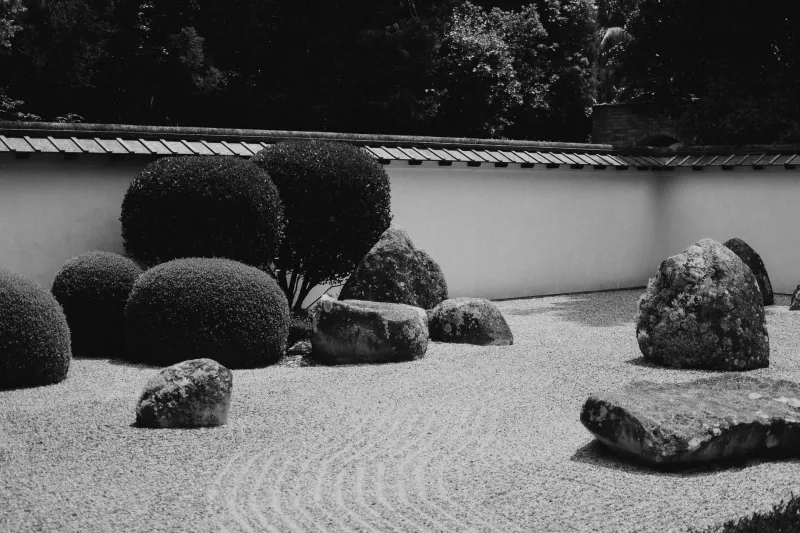
Japanese culture has long maintained a sophisticated aesthetic relationship with endings. The concept of mono no aware — the bittersweet appreciation of impermanence — suffuses everything from cherry blossom viewing to the deliberate incompleteness found in traditional ceramics. To end something well, in this view, is not to deny its ending, but to meet that ending with full presence and intention.
Applied to career and retirement, this sensibility produces something quite different from the American tendency to either cling to professional identity long past its natural conclusion or abandon it abruptly in favor of leisure. The Japanese-influenced approach asks its practitioners to sit with transition as a creative act — to ask not only what they are leaving, but what they are moving toward, and how the passage between the two might itself be made beautiful.
For fashion-conscious and design-oriented Americans, this framing carries particular resonance. The wardrobe, the home, the daily ritual — all of these, in Japanese aesthetic tradition, are understood as expressions of inner orientation. A person who has spent decades curating their professional and personal presentation does not simply stop upon retirement. They redirect. The same discernment that once shaped a boardroom presence begins to shape a studio practice, a teaching relationship, a garden.
What American Ambition Can Learn
The American model of success has always been oriented toward ascent. The Japanese model, at its most refined, is oriented toward depth. These are not mutually exclusive values, but they do produce very different relationships to the question of endings.
Americans who have embraced this philosophy tend to describe a similar shift in their experience of time. Where the years before retirement once felt like a countdown, they now feel like an opening. The pressure to maximize output gives way to a different kind of attentiveness — to relationships, to craft, to the slower satisfactions of mentorship and reflection.
This is not, it should be noted, a philosophy of withdrawal. Japanese cultural figures who embody ikigai most fully — master craftspeople, celebrated chefs, revered educators — often remain active and visible well into their eighties and nineties. What changes is not their engagement with life, but the quality and texture of that engagement. They have, in a sense, graduated from ambition into something more enduring.
Designing the Second Chapter
For Americans drawn to this approach, the practical work begins well before retirement itself. Japanese philosophy suggests that the conditions for a meaningful later life are cultivated gradually, not assembled at the last moment. Relationships with younger colleagues, investments in creative practice, the slow development of a teaching sensibility — these are not retirement hobbies. They are the infrastructure of a purposeful continuation.
The most elegant retirements, in this view, are not announced. They are arrived at. The transition is so thoughtfully prepared, so carefully shaped, that those watching from the outside may find it difficult to identify the precise moment at which one chapter ended and another began.
That seamlessness — that quality of continuity within change — is perhaps the most distinctly Japanese gift that ambitious Americans might receive. Not a philosophy of quitting well, but a philosophy of never quite stopping: of finding, in every ending, the quiet beginning of something worth waking up for.