The Collection That Cannot Be Kept: Why America's Most Cultured Tastemakers Are Investing in Impermanence
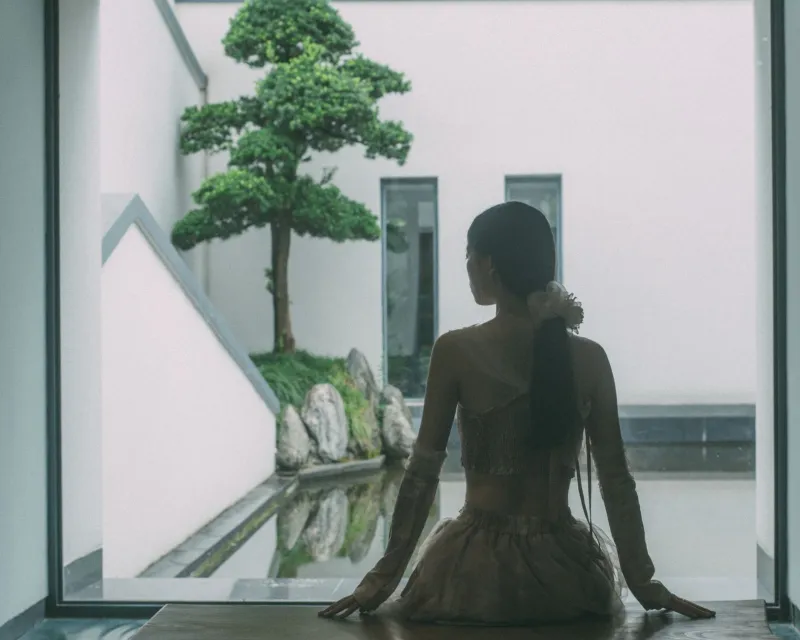
There is a garden in Kyoto that has been maintained, with extraordinary precision, for more than four centuries. Its stones have not moved. Its raked gravel is reset each morning. And yet, in the philosophy that governs it, the garden is understood to be in a state of constant, irreversible flux—alive to the quality of the light, the temperature of the air, the particular angle of the afternoon sun in this season and no other. To visit it today is to encounter something that will never exist in precisely this form again.
This is the Japanese concept of mono no aware (物の哀れ)—the bittersweet awareness of impermanence, the understanding that the transient nature of things is not a deficiency but the very source of their beauty. It is a sensibility that has shaped Japanese art, architecture, and design for centuries, from the deliberate asymmetry of a tea bowl to the brief, absolute perfection of a cherry blossom.
And it has, with quiet but unmistakable momentum, begun to reshape the collecting instincts of America's most culturally sophisticated class.
The Limits of the Permanent Collection
For most of the twentieth century, American collecting culture was organized around permanence. The acquisition of museum-quality objects—paintings, sculpture, furniture, antiquities—represented the highest expression of cultural aspiration. To collect was to accumulate; to accumulate was to preserve; to preserve was to confer a kind of immortality on both the object and its owner.
This model has not disappeared, but it has been complicated. Among younger collectors, and among those who came to serious collecting later in life with broader cultural references, the limitations of the permanent-object model have become increasingly visible. A collection of flawless objects in a climate-controlled environment is, in a certain light, also a collection of solved problems—beautiful, certainly, but inert. The objects do not change. The relationship between collector and collection does not deepen. The ownership is total, and in its totality, somehow diminishing.
Japanese aesthetic tradition offers a corrective. In a culture where the tea ceremony itself is understood as a work of art that exists only in the moment of its performance, where the most prized ceramics are valued precisely for the evidence of their making and their use, the relationship between owner and object is never one of simple possession. It is, rather, a relationship of attention—a continuous, active engagement with something that is always, in some sense, in the process of becoming or departing.
Living Works and the Gardens That Grow Without Permission
The most visible expression of this shift in American collecting is the growing investment in living works—gardens, plant-based installations, and ecological art commissions that change with the seasons, age visibly, and resist the kind of stasis that conventional collecting demands.
Landscape architects who work with high-net-worth American clients report a meaningful increase in commissions that explicitly reference Japanese garden philosophy—not merely its visual vocabulary of stone and water, but its underlying logic of designed impermanence. Clients are requesting gardens that will look different in five years than they do today, that will require ongoing cultivation rather than simple maintenance, that will, in a sense, never be finished.
This is a profound departure from the trophy-garden tradition, in which landscape design served primarily as a backdrop for the architecture it surrounded. The living garden as a primary aesthetic investment—one that demands attention, rewards patience, and cannot be photographed definitively—represents a genuinely new relationship between the collector and what they have chosen to tend.
Ikebana and the Art of the Unrepeatable Arrangement
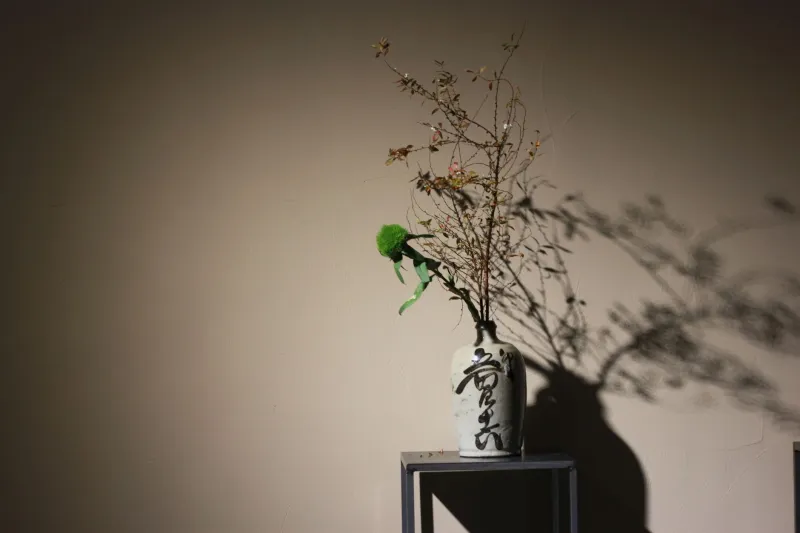
At a more intimate scale, the Japanese art of ikebana (生け花)—the disciplined arrangement of flowers, branches, and natural materials according to principles of asymmetry, negative space, and seasonal specificity—has found an increasingly serious audience among American tastemakers who might once have dismissed floral arrangement as domestic decoration.
What distinguishes ikebana from conventional floristry is not merely its visual restraint, though that is striking enough. It is the philosophical framework that surrounds it: the understanding that each arrangement is a singular event, shaped by the specific materials available on a specific day, and that its beauty is inseparable from the fact of its brevity. The arrangement will change within hours. It will be gone within days. Its value lies entirely in the quality of attention brought to its creation and observation.
For collectors accustomed to the permanence of their holdings, commissioning or studying ikebana represents a deliberate exercise in releasing the instinct to preserve. Several prominent American art advisors now include ikebana sessions—sometimes led by masters flown in from Japan—as part of the curatorial programming they offer to major clients. The response, consistently, is described as unexpectedly affecting: the experience of investing full attention in something that will not last proves, for many, more memorable than any acquisition.
Experiencing Ownership Differently
The philosophical thread running through all of these practices is a reconception of what ownership means and what it is for. In the conventional Western model, ownership is about security—the permanent removal of an object from the realm of the uncertain and its placement within a protected, controlled domain. The collector owns; the object is owned; the relationship is fixed.
Japanese aesthetics proposes an alternative: that the most meaningful relationship with a beautiful thing is not one of possession but of witness. To be present to something in its full, fleeting particularity—to see the garden in this morning's light, to observe the ikebana arrangement before it begins to turn, to attend the tea ceremony in this room with these people on this unrepeatable afternoon—is to have something that no title of ownership can confer.
Among America's most culturally literate collectors, this reframing has proven not merely intellectually appealing but practically transformative. The shift from acquiring to attending, from owning to witnessing, does not diminish the collector's engagement with beauty—it deepens it, in ways that no permanent acquisition ever quite manages to do.
The most coveted thing, it turns out, is the one you cannot keep.